
The weight beneath the House
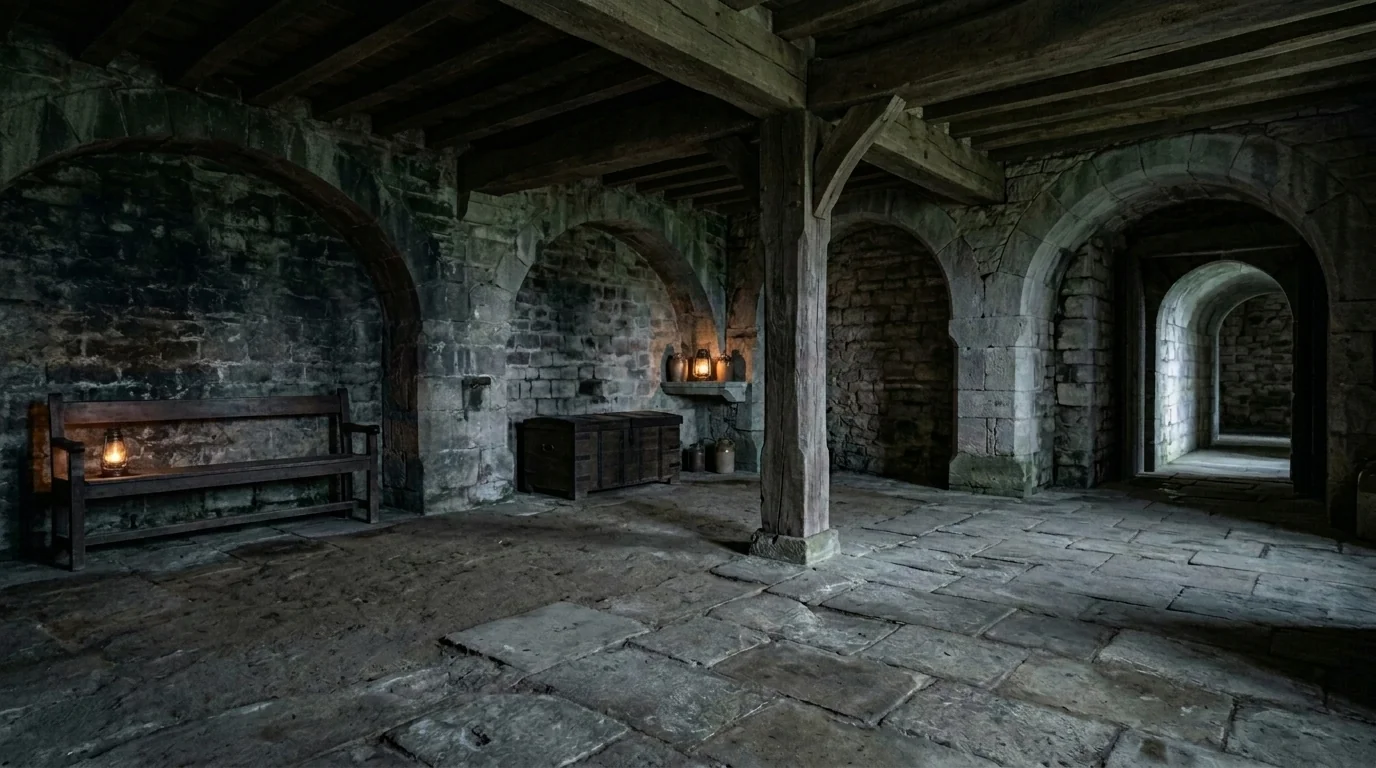
Shadow Cellar is where the House of Ghosts feels most firmly connected to the ground. Old stone, worn flagstones and substantial foundations lend the chamber an unshakable character. The air seems slower here, and the light gathers in restrained pools instead of travelling freely across the surfaces.
There is a visible passage to the right, leading onward through the structure of the old mansion. The cellar is neither a dungeon nor a scene designed to frighten visitors with chains, skulls or barred doors. It is an enduring room that carries the marks of age. Its mystery arises from the fact that so much of a house’s history is supported by what remains beneath the rooms everyone sees.
Shadow Cellar’s atmosphere is still time, with deep roots and the weight of the House as its sensory anchors. For some visitors, that stillness may initially feel unfamiliar. Stay a little longer, and the quiet begins to feel less like a warning and more like an invitation to notice what has endured.
The foundation of memory
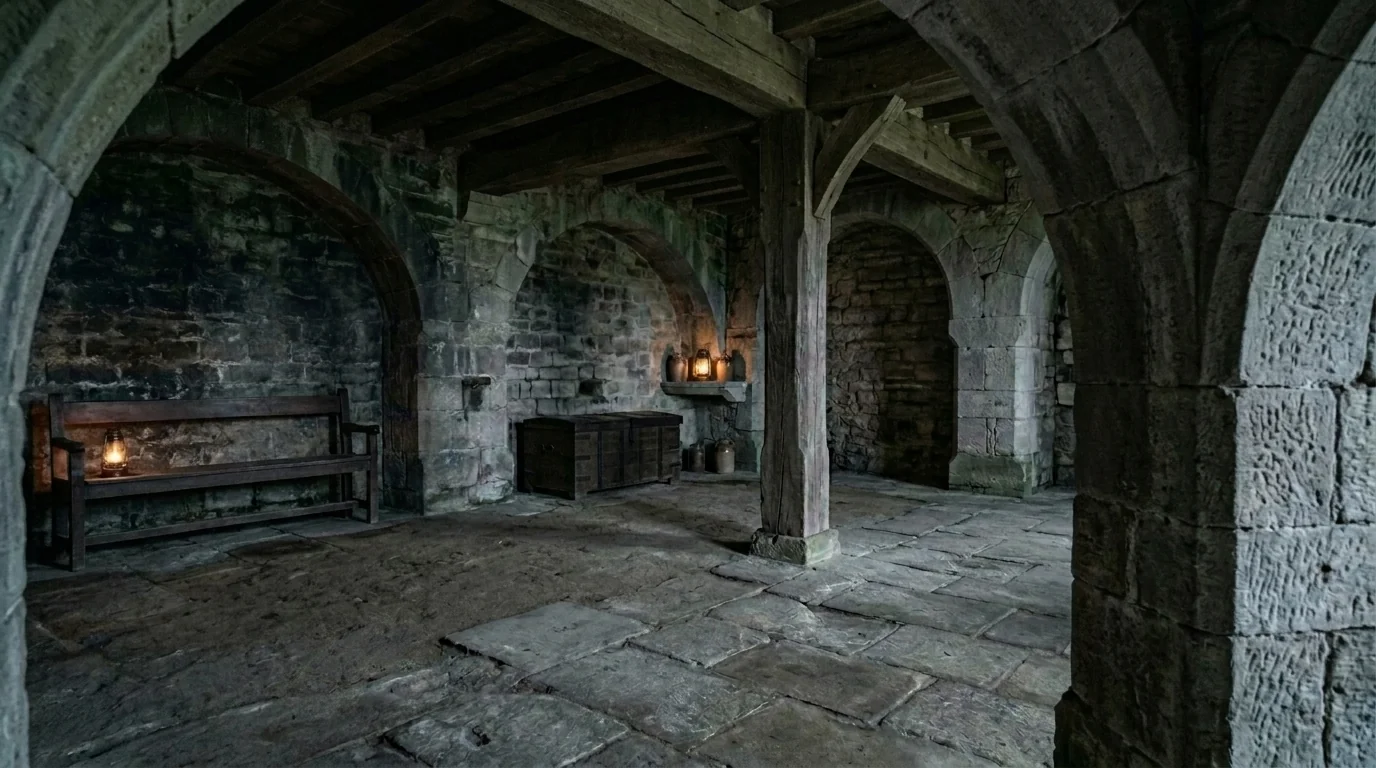
The tales surrounding the cellar often begin with a question: what does a house remember after the people who lived in it are gone? The stones bear the signs of use, yet they cannot tell their own stories. The silence encourages anyone who enters to imagine the weight of the years held above.
One old account claims Shadow Cellar was the first part of the House to be made. Another says it emerged out of memories that had become too heavy to carry elsewhere. The second is best understood as folklore, not a factual description of how the mansion was built. What unites the two tales is their belief that a foundation holds more than a building.
A visitor who pauses at the edge of the passage might think about all the footsteps that once crossed the floor and left no lasting mark. The cellar does not answer. It allows the thought to remain, giving time a different scale from that of the rooms above.
The prison for memories
Shadow Cellar’s most unsettling legend describes a prison, although its prisoners were never bodies. They were memories, placed out of sight because their owners could not bear to acknowledge them. In some tellings these recollections were locked behind imaginary doors; in others they were kept in jars that appeared to rattle when the room fell still.
These images belong to the inherited story. The approved physical cellar contains neither a prison nor a collection of secret vessels. Its stone architecture must remain coherent and recognisable in every view.
The tale is powerful because it suggests that a memory is not made lighter by being hidden. The longer the imagined jars remain closed, the more attention their contents seem to demand. Unlike a conventional ghost story, the fear is not of something unfamiliar entering the House; it is of something familiar returning to mind.
The lantern that went dark
A second legend describes a lantern once hung near the heart of the cellar. Its light was said to make forgotten truths visible, not by illuminating every corner but by helping a person see the one thing they had chosen to overlook.
Then, according to the story, the lantern went out. Some tellers believed it had served its purpose. Others thought someone extinguished it to avoid what it revealed. No ending has displaced the others. Every version leaves the cellar in a measured half-light, with the responsibility for remembrance returned to the visitor.
Whether a lantern ever hung there matters less than what its light revealed. It has become a symbol of the Room’s atmosphere: still time, enduring stone and the sense that the past can be held without being displayed.
What the Cellar leaves with you
The ghosts who may one day have individual stories tied to Shadow Cellar will retain their own types, identities and marbling. The Room need not make every ghost dark or severe. Its weight provides a setting in which quite different spirits may be encountered, each bringing its own pattern and history to the stillness.
The Cellar’s legends do not need a named resident at every turn to keep their hold on the imagination. It already carries the question that makes visitors linger: what deserves to be remembered, and what have we chosen not to see? The unlit lantern may be only a tale, but the thought it leaves behind feels solid as stone.
The passage remains open when you leave. Return to The Rooms and move back into the other atmospheres of the House, carrying a little of Shadow Cellar’s stillness with you.