
Afternoon caught beneath the rafters
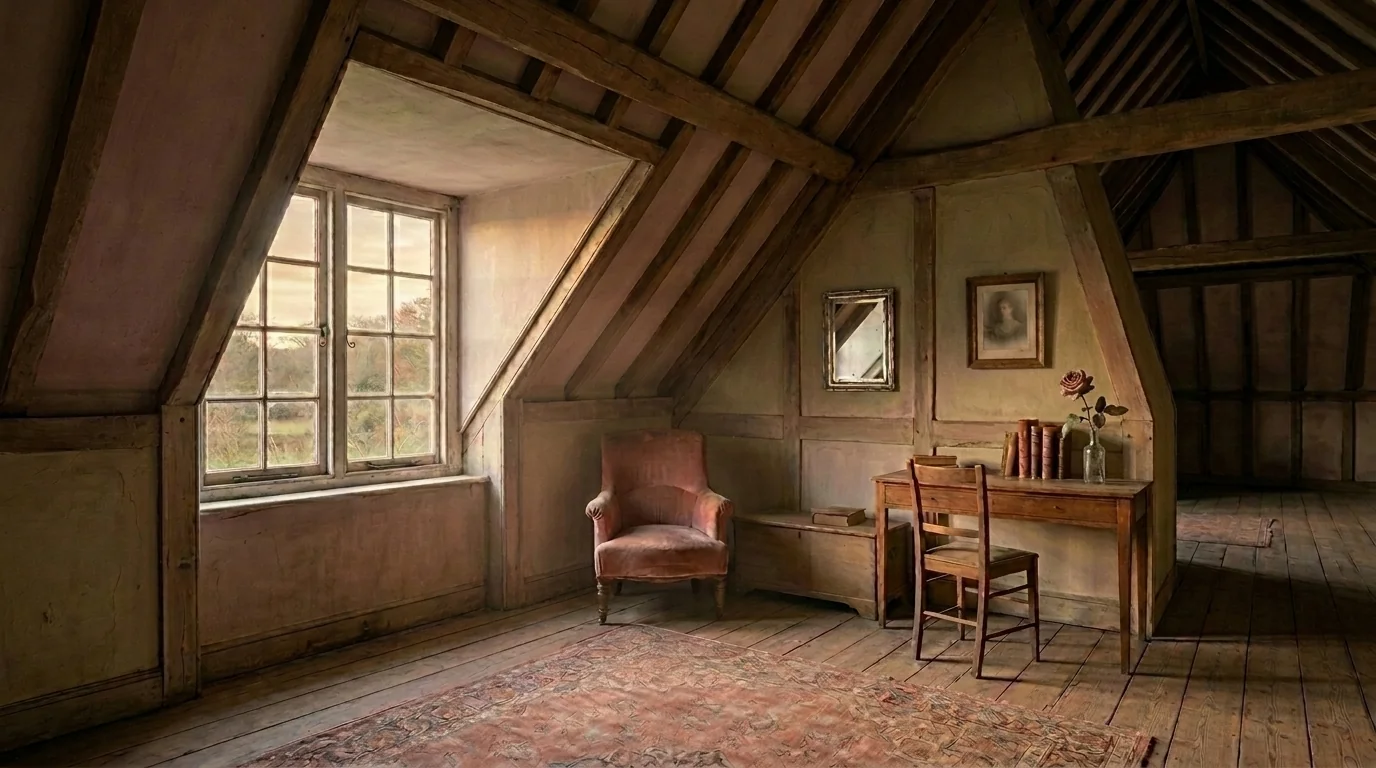
At the top of the House of Ghosts, Rose Attic seems to hold the last warmth of an afternoon long after the rest of the mansion has grown cool. Light settles beneath the sloping roof. Suspended dust motes drift through it, and the old timber keeps the room’s history close without revealing every detail.
The Attic’s atmosphere is lingering time. It is not a forgotten storeroom packed with abandoned furniture, nor a chamber overwhelmed by flowers. Its approved form is sparse and considered: weathered rafters, an aged floor and a modest furnished corner that makes the old building feel inhabited. The lack of clutter gives an unexpected weight to what is present.
A visitor might find that a familiar texture recalls a person’s voice or a distant summer. That sensation is the reason so many Rose Attic stories begin with an ordinary object remembered rather than a ghost suddenly appearing.
The letters that were never sent
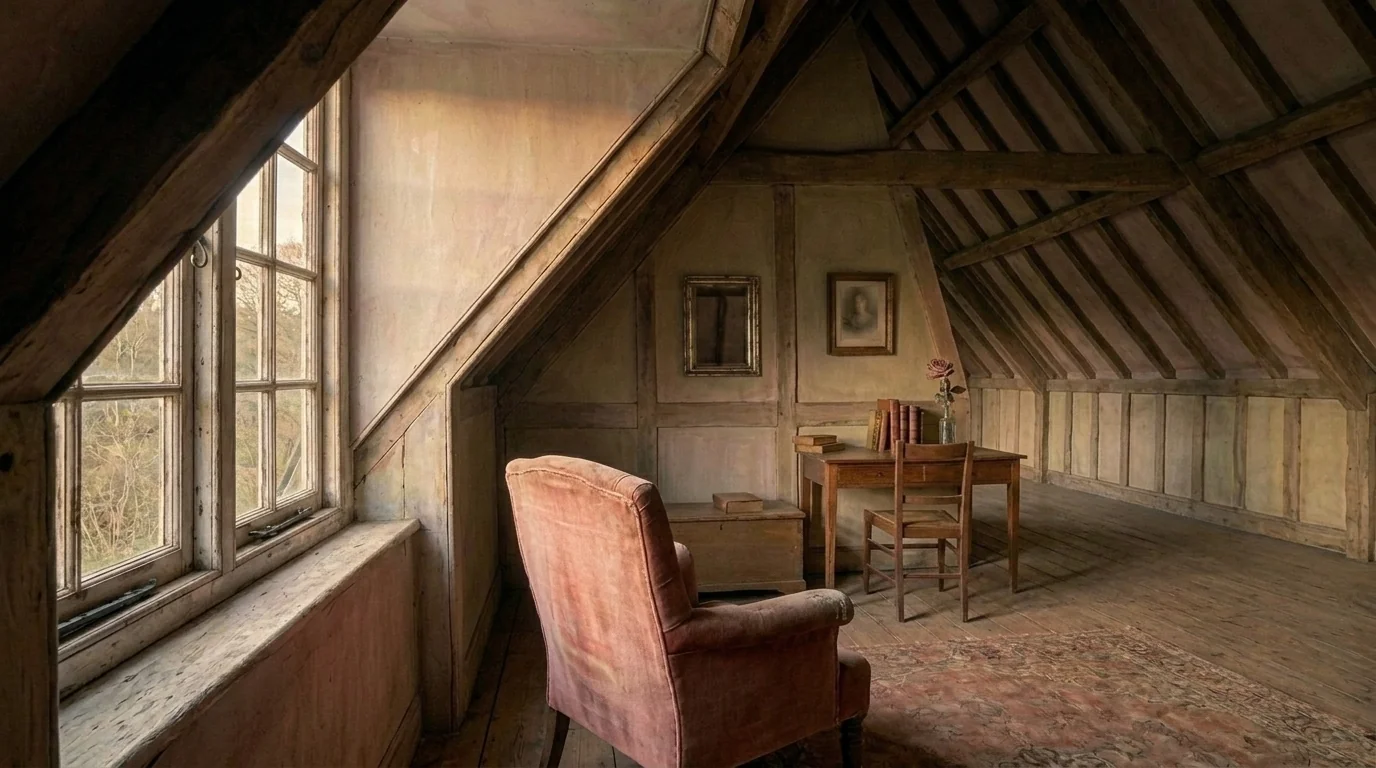
One tradition describes Rose Attic as the place where words too difficult to speak were once put aside. In the telling, letters gathered there: apologies folded carefully, declarations of affection and farewells that their writers could not bear to deliver.
Some storytellers imagined trunks full of paper and lace. Others insisted that nothing remained to be found because the meaning had long since passed into the timber and the still air. The Attic’s lore does not require those trunks to be part of its current physical setting. Their importance lies in the question they leave behind: what becomes of a thought when the moment to speak it passes?
Rose Attic does not promise an answer. It gives that question the gentleness of afternoon warmth and the patience of a room where nothing seems in a hurry to disappear.
The bride’s veil and the child’s roses
A more intimate tale tells of a bride who left her veil beneath the rafters on the eve of her wedding and was gone before dawn. Some versions describe a mysterious disappearance; others let the silence surrounding it carry the uncertainty. The veil became less a piece of clothing than a symbol of an occasion that never arrived.
Another story remembers a child who spent summers weaving crowns from dried roses. The small crowns were left as offerings to the unseen companions of the House, and people claimed to find them in unexpected places even after the child had grown and left.
These legends are not proofs of vanished inhabitants. They endure because both are about the things we leave behind without intending to: a promise, a game, a gift made for someone who may never be seen.
The legend of Blooming Night
The Attic’s best-known mystery is Blooming Night. Once, it is said, moonlight entered at just the right angle and the room appeared to fill with roses. Petals descended from the beams, curled through the air and vanished before anyone could gather them. Those who witnessed it spoke of a familiar fragrance and an overwhelming sense of being near someone they missed.
Some said the room was transformed. Others wondered whether a remembered scent and a shaft of light had made the roses seem present for a moment. Either way, Blooming Night belongs to memory, where a single flower can become a roomful. By the following afternoon, only the sloping beams and familiar warmth remained.
The Room’s lingering time, suspended motes and afternoon warmth give that old legend a believable emotional setting, even without a supernatural display.
The spirits and the way back down
Ghosts associated with Rose Attic remain individuals, with their own marbling, Ghost Types and histories. The Room does not assign every spirit a rose-coloured body or a single tender personality. Instead, its stories offer a setting in which different identities can be encountered through memory and quiet return.
The Attic’s own stories are worth following even without a named spirit waiting at the end of every passage. The letters, the veil and the child with the rose crowns leave more than enough for a visitor to wonder about. They make the place feel inhabited by remembrance rather than crowded with apparitions.
Before you descend, look once more at the rafters and the slowly shifting light. Rose Attic suggests that the passing of time need not make a memory less vivid. From here, return to The Rooms and choose another story waiting elsewhere in the House.