
Where sound comes to rest
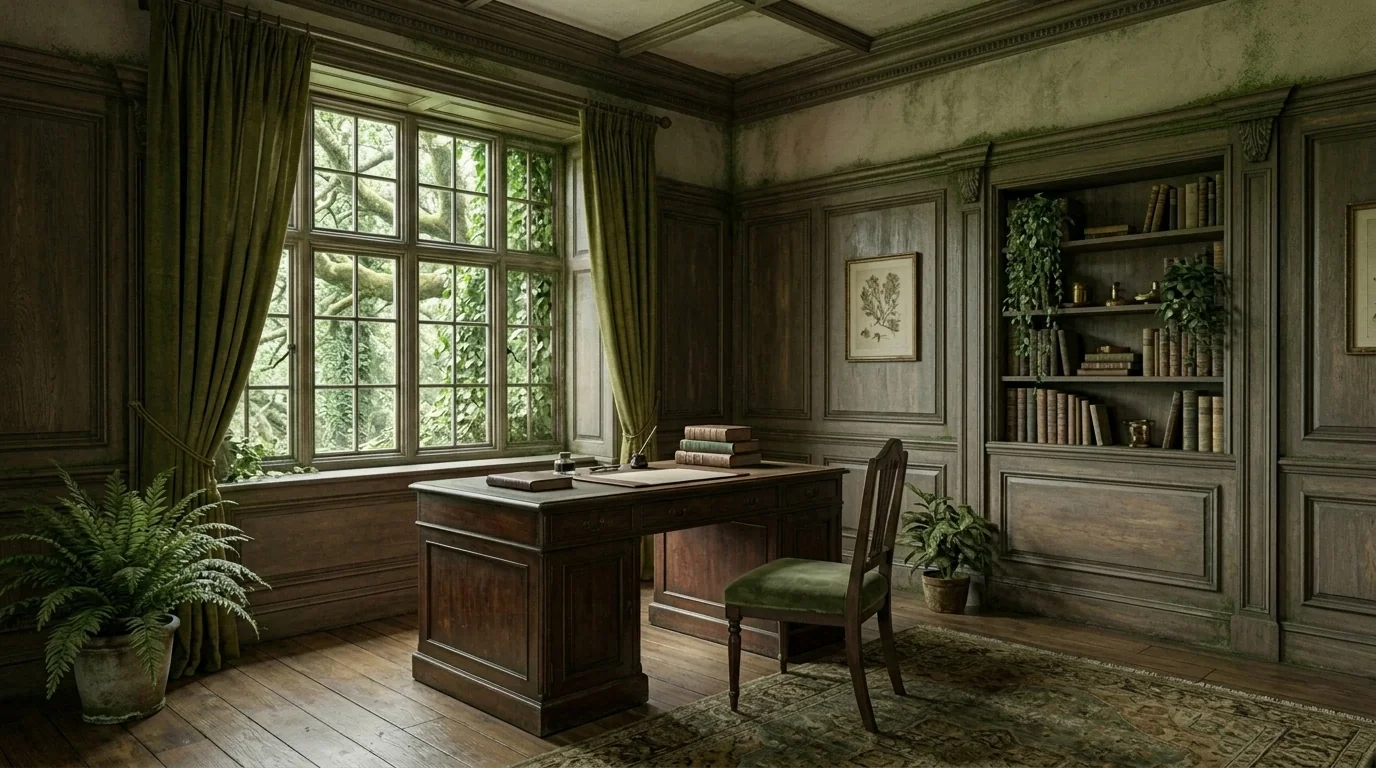
Mossy Study is one of the quietest Rooms in the House of Ghosts, though its stillness has an unmistakable character. Sound softens here. A footstep seems to lose its sharp edge, and the rustle of a page can feel more important than the conversation that came before it. The silence is not empty; it has weight and texture.
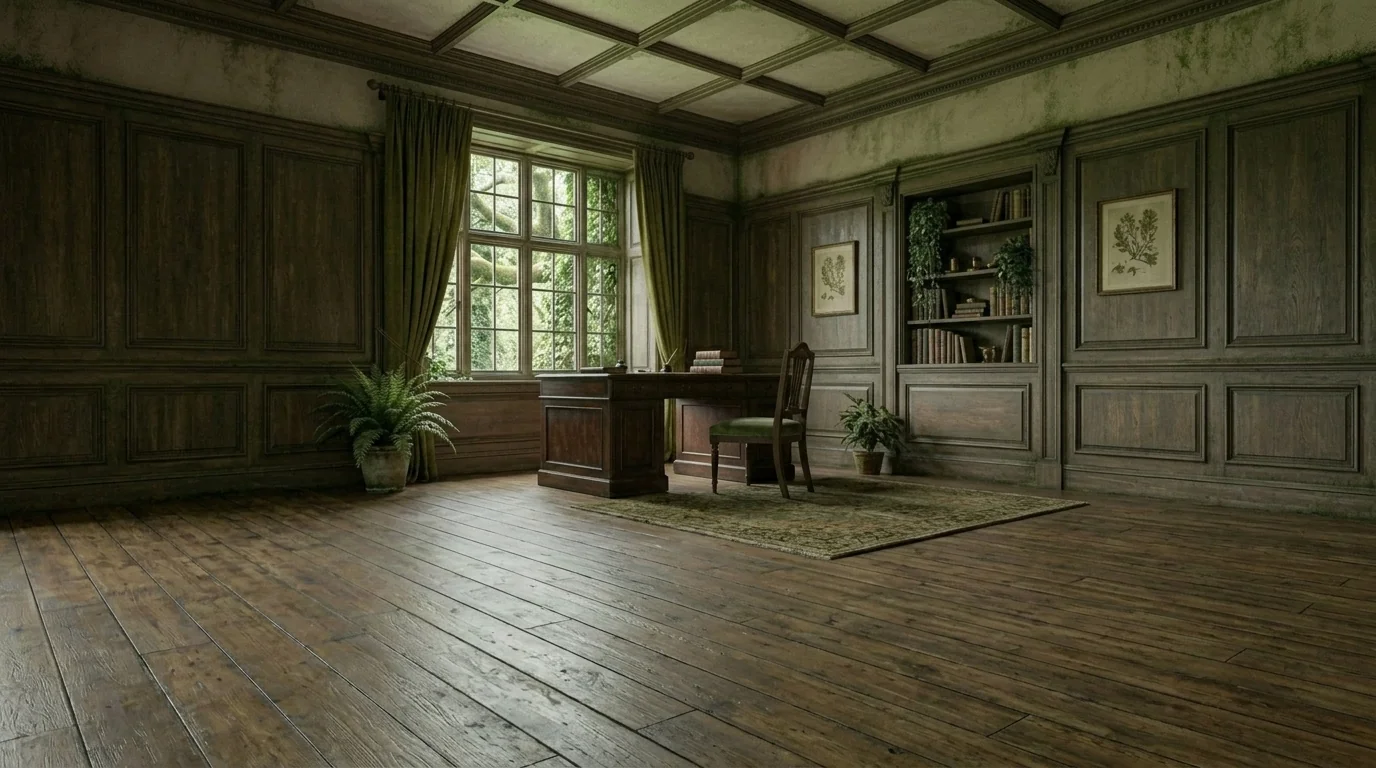
The room is a substantial historic study with an old writing desk, a chair, built-in shelves and restrained greenery. Muted light enters through a large window and green curtains. A fern and a few trailing plants soften the timber, but do not claim the walls or bury the furniture. The books remain part of a cared-for room, not a ruined library with damp pages scattered across stone.
Its locked atmosphere is muted sound: dampened echoes, hushed weight and velvet silence. A visitor might notice that each movement becomes more deliberate in such a place. There seems little reason to hurry when the room has made even a small noise worth hearing.
The study that remembers listening
Mossy Study’s legends often concern people who came looking for answers and discovered that quiet attention mattered more than finding the right words. The first tale speaks of a scholar who entered the House and never quite left. Her work was remembered, but not her name. Later visitors said they could hear faint lessons within the rustling leaves or catch the suggestion of a voice between turning pages.
The older story does not offer a dramatic haunting. The scholar’s presence is almost indistinguishable from the habits of a room: a chair pulled closer to a desk, a book opened where it had once been left, an unspoken question held for a little longer. Whether anyone ever heard the scholar is uncertain. People repeated the tale because the room made listening feel different.
In Mossy Study, the most persistent echoes are the quietest ones. Its architecture stays fixed, but the thought of someone having studied there before can make the desk seem like part of a much longer conversation.
The seed planted in grief
A second legend tells of a seed planted after a loss. It was watered without expectation and watched through long weeks when nothing seemed to change. In some versions, the seed grew into vines that drew lost souls towards shelter; in others, the act of returning each day mattered more than any growth.
The story has gathered images of roots and moss over time. Those are poetic memories, not instructions to depict the Study as an overgrown stone chamber. The plants seen within the accepted Room remain restrained, their presence making the bookcase and desk seem more lived in rather than less.
The legend’s meaning is gentle but enduring: care can continue even before there is anything visible to show for it. There is an echo of that patience in the way light settles across the books and then slowly fades.
Thorn, the Patient Keeper
Thorn, the Patient Keeper, belongs to the Study’s inherited folklore. Old accounts picture a green-and-grey marbled figure who listens to every voice that once passed through the room. Some tellers thought Thorn guarded the books. Others believed the name described a presence that remembered unfinished thoughts without judging them.
Thorn’s tale is one of the Study’s particular traditions, not a pattern repeated in every ghost who might come to it. The room is spacious enough in spirit to hold many kinds of presence, each distinct. Its muted sound makes the stories feel related without giving all their characters the same voice.
Thorn matters because the tale gives the Study’s quiet a listener. A visitor can imagine being heard without having to explain every thought aloud. That is a different kind of haunting from the open passage of Moonlit Hall or the warmth of Ember Room.
Leave the page open
The Study offers no grand revelation. Its beauty lies in the small things: a desk ready for a letter, plants beside the window, books waiting to be opened, a room that makes each ordinary sound seem carefully placed.
The Study’s character is complete even when no particular ghost steps forward to tell its own tale. The visitor can leave the scholar’s work unfinished, imagine the seed growing slowly and carry away the memory of velvet silence. It is a Room that makes a question feel worth keeping for another day. Return to The Rooms to find what the House sounds like beyond the Study’s threshold.