
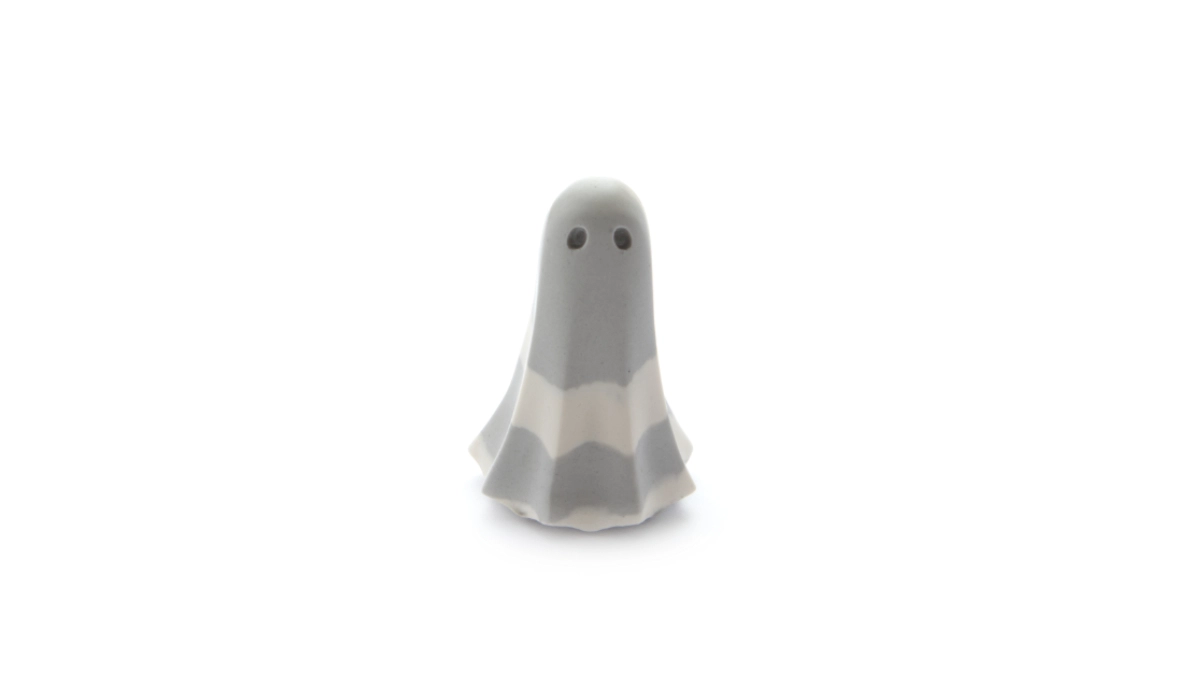
Phantom · Moonlit Hall
On the evening Moonlit Hall hosted a small winter recital, a visiting quartet discovered that the final page of its music was missing. The players had travelled too far to cancel, yet the closing passage belonged to an arrangement none of them knew by heart. Their youngest member, a violist named Mara, offered to piece it together before the guests arrived.
She tried the melody three different ways. Each sounded convincing until the last few notes, where the instruments met in an awkward tangle. As Mara stood in the corridor listening to the others practise, she noticed a pale figure at the end of the hall. Grey and white marbling crossed its rounded form, and two dark, recessed eyes rested in the softened moonlight.
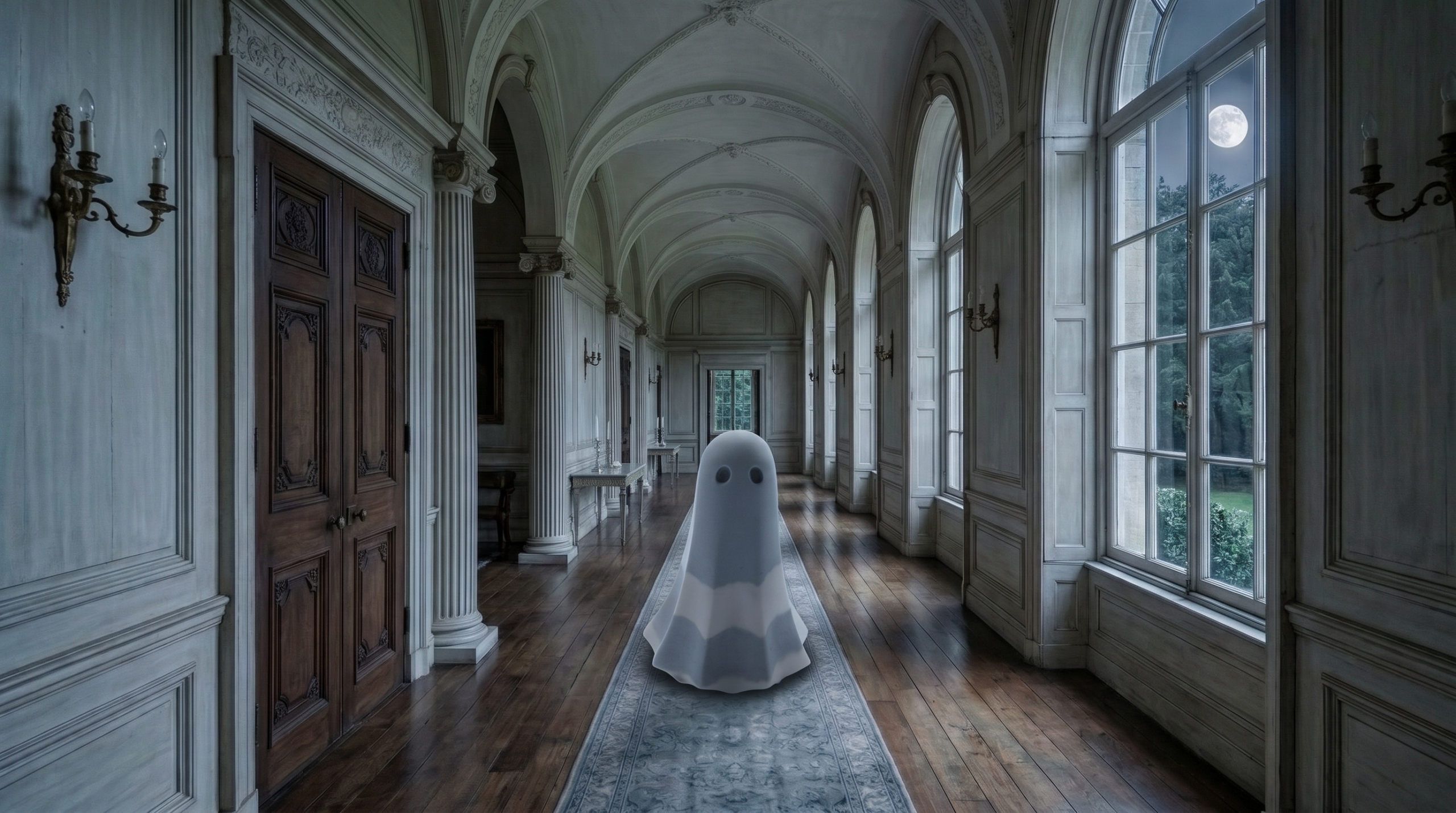
The figure was Liorath, a Phantom whose floating silhouette seemed almost part of the silvered shadows. It did not reach for the papers or offer a missing tune. It simply remained at the edge of the rehearsal, still enough that Mara began to hear the pauses between the notes as clearly as the notes themselves.
Back in the room, Mara asked the quartet to play the passage again, but this time to stop where the missing page ought to begin. The silence was unfamiliar. One musician started to fill it, then held back. Beyond the doorway, Moonlit Hall kept its cool luminosity, and the corridor seemed to soften around their unfinished phrase.
When the audience arrived, Mara explained that the final movement would end differently that evening. They played all the music they knew, and where the lost ending should have been, they lowered their instruments together. No one applauded immediately. Guests listened to the room settling, to a distant footstep, and to the quiet left behind by the last clear note.
A caretaker later found the missing page caught inside the lining of a music case. The quartet laughed at their mistake, but Mara chose not to repeat the ending. The unexpected silence had become part of the evening, not because the music was broken, but because everyone had been willing to leave something unfilled.
Only afterward did Mara see Liorath again, hovering beside the far arch where light thinned into shadow. Its presence felt neither like a performer nor a judge. As a Phantom, it stayed watchful and apart, allowing the people of the House to decide for themselves what the silence might mean.
Mara came to call the figure the Lunar Silence. On later visits she sometimes heard the complete arrangement, and sometimes a different piece entirely. Yet whenever the players paused together, the silvered edges of Moonlit Hall seemed to hold that moment gently, without asking anyone to explain it.
The House remembers the recital for its quiet ending. The missing page was returned to its place, the instruments were packed away, and Liorath drifted beyond sight. What remained was the discovery that a pause could belong to a story as surely as its final words.