
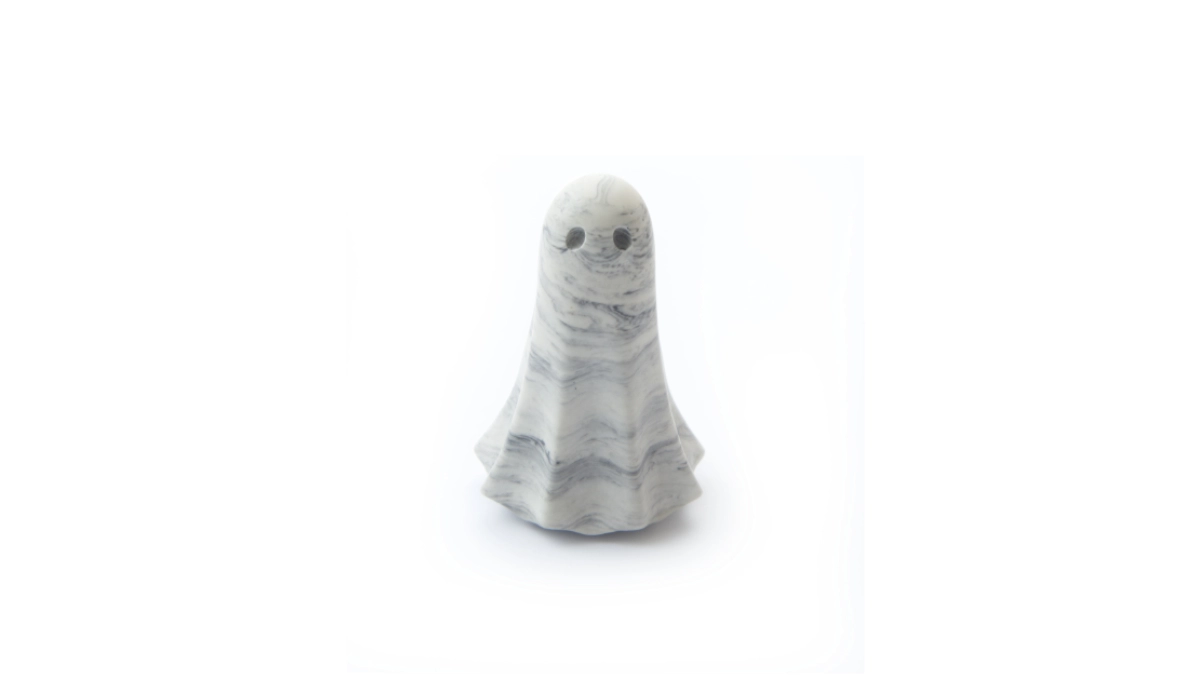
Phantom · Moonlit Hall
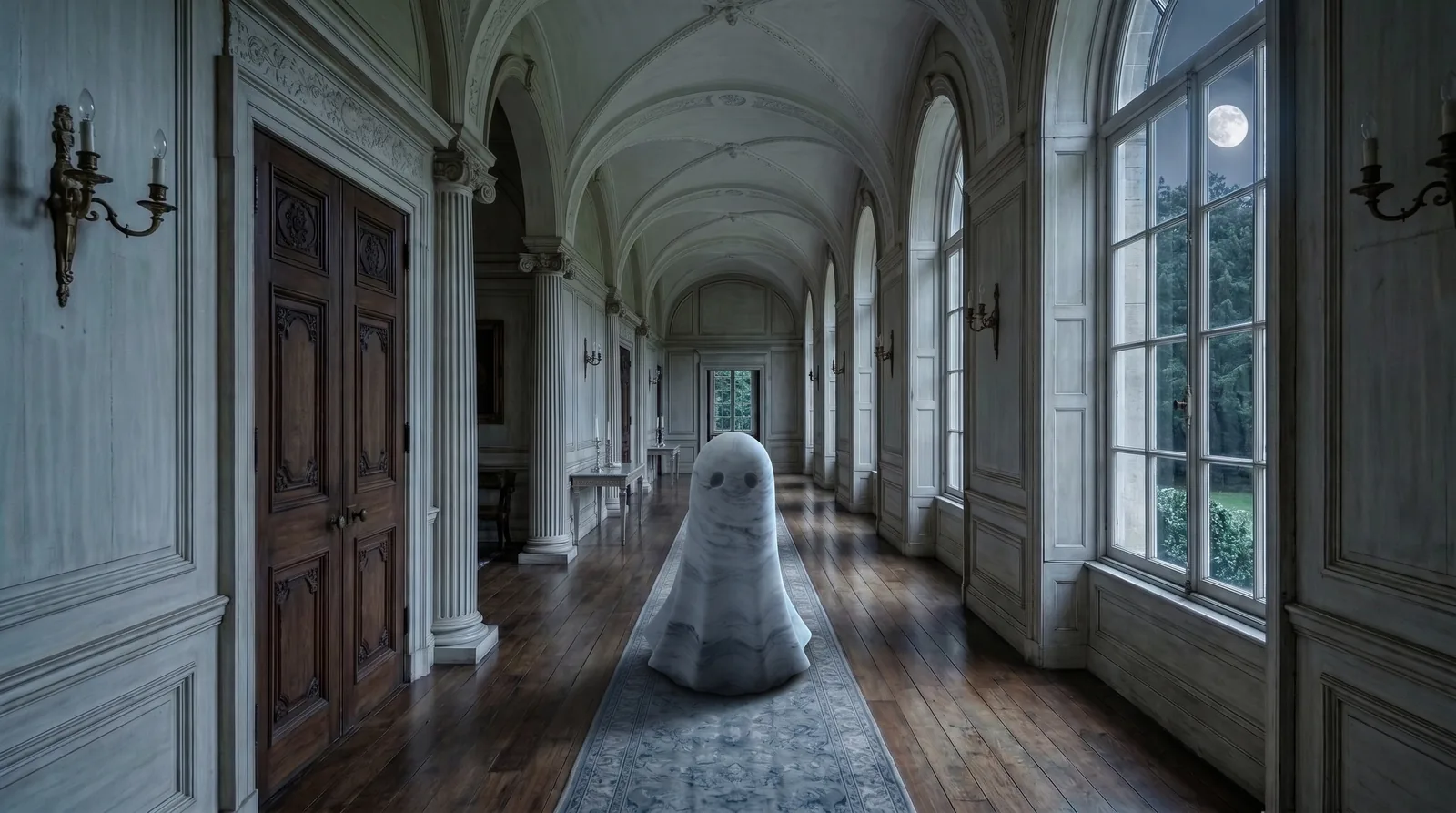
On the evening Moonlit Hall hosted a storytelling performance, a young dressmaker named Orla hung a silver gauze curtain across a doorway. Guests would sit on one side while performers cast silhouettes on the other. Moments before the show, a seam pulled free and left a long tear through the cloth. Orla was staring at her ruined work when a ghost appeared beside the loose fabric, its pale marbling briefly visible in the silvered light.
The Phantom had a rounded grey head, recessed eyes and uneven white markings. It seemed to attend to Orla’s distress, lingering when she paused and withdrawing into the corridor reflection when she moved. The Hall’s cool luminosity came from its own light, not from the ghost. Orla wanted to remove the curtain before anybody saw it, but the evening’s youngest performer arrived carrying a cardboard moon.
The child looked through the tear and noticed how the moon’s shape changed when the curtain shifted. Instead of trying to hide the damage, she suggested making it part of the play: the gap could become a doorway through which each shadow character entered. Orla was uncertain. A perfect curtain had taken weeks to sew. Yet there was no time to replace it, and the idea was too curious to dismiss.
As the guests settled, the performers improvised a tale about a traveller searching for a lost constellation. Every silhouette passed through the tear, revealing an unexpected strip of the Hall before returning to shadow. A paper bird became a messenger; the cardboard moon became a map. The audience began offering suggestions, and soon the tale belonged to everyone rather than to the script they had rehearsed.
Joralis appeared once more at the edge of the curtain, a responsive presence that never touched the cloth. Someone called the ghost the Moonlit Veil because it had been first noticed beside the torn gauze that made the evening unforgettable. Orla smiled at the name. The Phantom had not saved her work through any special power; a child had seen a possibility she had missed.
After the performance, Orla held the curtain up to Moonlit Hall’s silvered edges and softening shadows. The tear remained plainly visible. She decided not to conceal it. The cloth had been designed to separate performers from viewers, but its unexpected opening had helped everyone share a story. She folded it carefully for the next gathering, no longer calling it ruined.
The ghostly figure had withdrawn by the time the guests left. Orla remembered the evening whenever a seam failed or a plan changed. Sometimes the most interesting part of a story began at the very place where the curtain did not quite meet.