
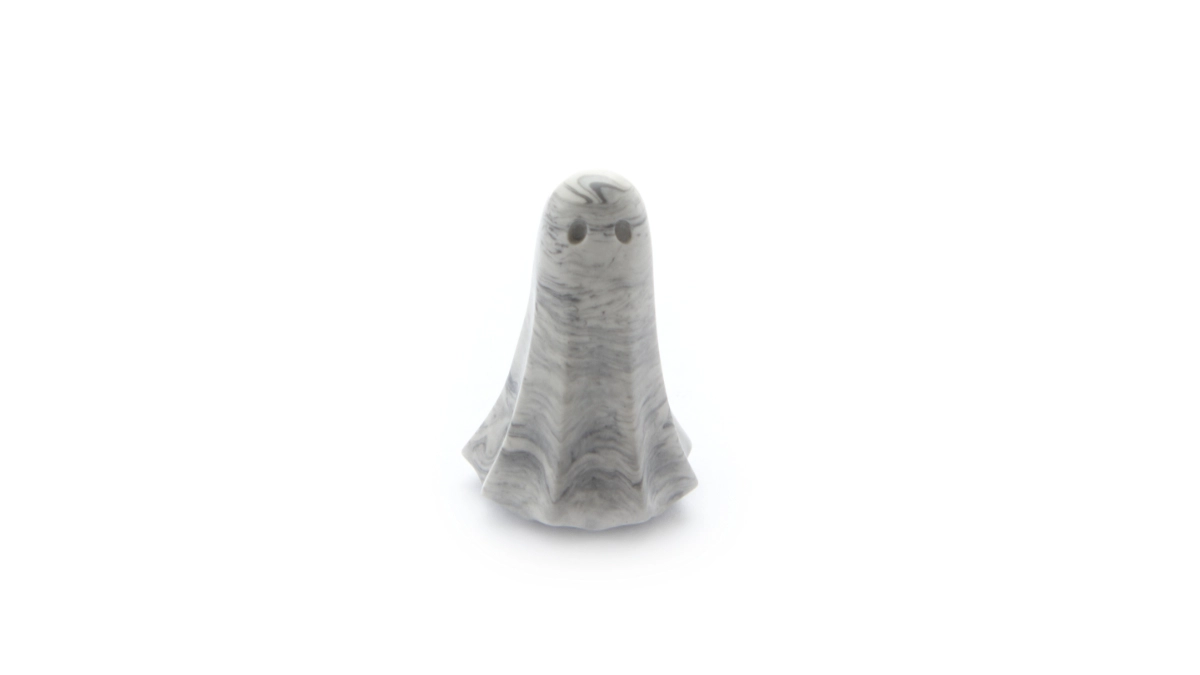
Ghostling · Moonlit Hall
Late one evening, a caretaker named Bea was polishing the old glass lanterns along Moonlit Hall when she noticed a moth trapped inside one. Its wings brushed against the panes as it searched for a way out. Bea lifted the lantern, but the narrow opening was too close to the delicate wings. As she set it down again, a small ghost appeared beside the silvered frame, pale grey-and-white marbling briefly visible in the corridor light.
Liora was a Ghostling, with a rounded head, recessed eyes and a softly irregular outline. It appeared for a moment whenever Bea paused and vanished when she turned away. The Hall’s cool luminosity was not the ghost’s doing, and the moth had flown into the lantern by itself. Bea could have forced the glass door open quickly, but she feared doing more harm than good.
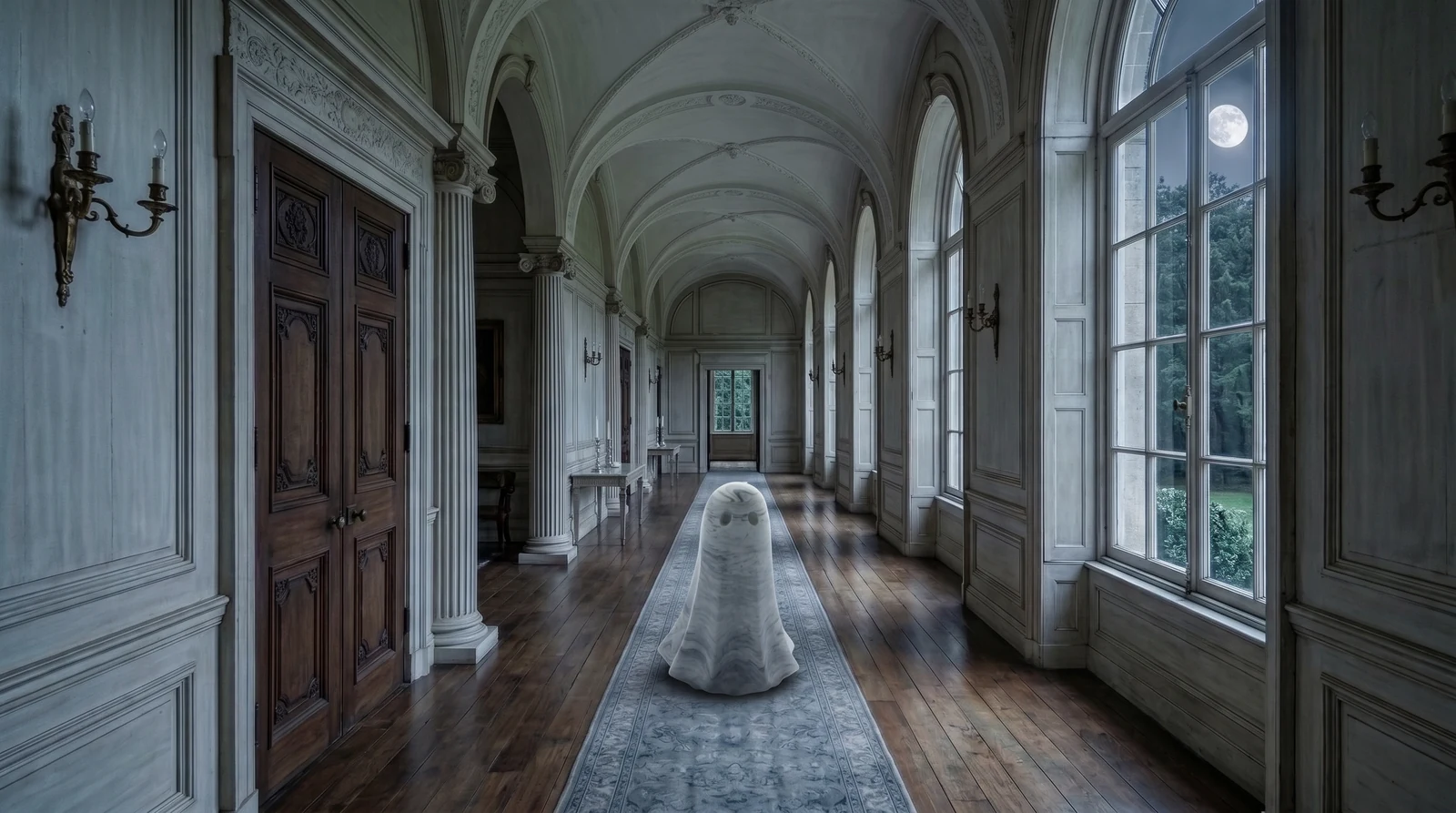
She fetched a folded cloth and asked a passing visitor to hold the lantern steady. Slowly, she released the stiff clasp and opened the widest side. The moth did not fly out. It clung to a corner, still as a leaf. The visitor suggested tapping the glass, but Bea shook her head. She had opened a way; now the little creature needed time to choose it.
They moved the lantern to an open window, where night air flowed gently past the frame. Bea kept her hand still beneath the door in case it swung back. The moth stirred, climbed towards the edge and hesitated. Liora appeared briefly in the silvered reflection, then slipped from sight. Neither caretaker nor ghost hurried the small visitor along.
At last the moth lifted into the dark beyond the window. The visitor laughed with relief, and Bea closed the lantern without putting its light back on. They stood for a moment looking at the place where the creature had disappeared. The evening had involved no grand rescue, only careful hands and the decision to stop once a safe path was open.
Later the caretaker called the ghost the Silver Glow, remembering its first appearance beside the glass. The name belonged to the Hall’s reflected light, not to a supernatural flame. Bea began checking each lantern before lighting it, and sometimes asked the evening visitors to help. She had learned that paying attention could prevent a problem before it needed solving.
No one saw that particular moth again. The ghostly figure was equally fleeting, but Bea remembered both whenever she crossed the corridor. Moonlit Hall still held its silvered edges and softening shadows. She had not kept the moth to prove her kindness, and that was the point: sometimes care meant knowing when to let something go.